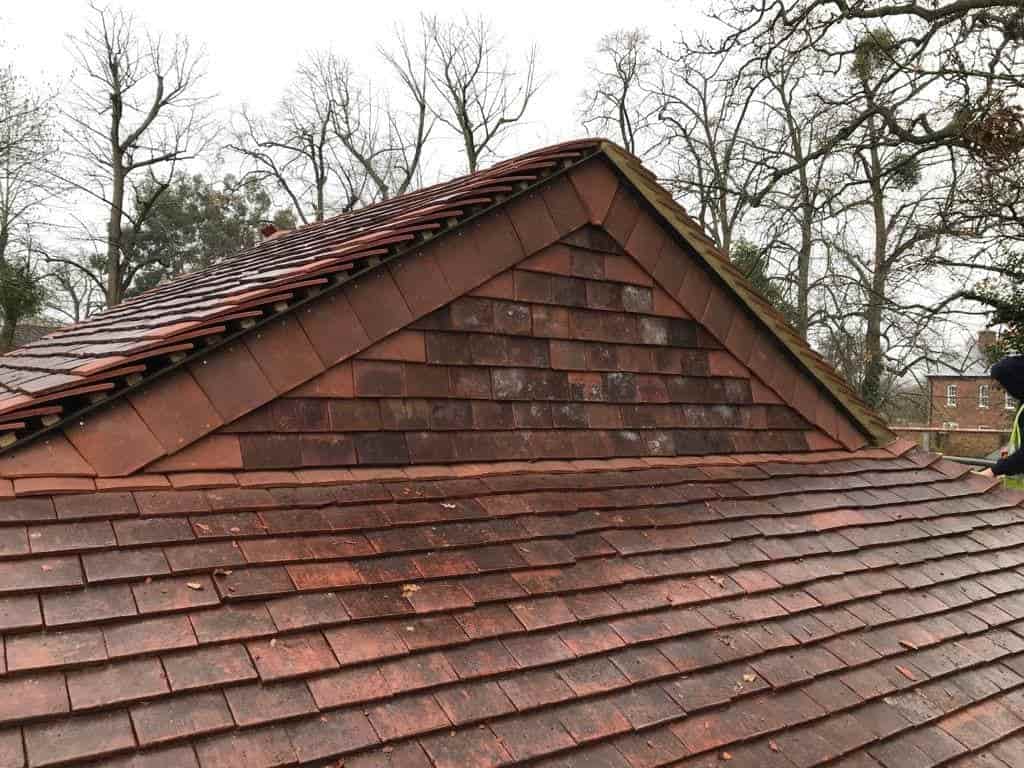
Tiles and slates naturally receive most of the attention when homeowners think about roof maintenance, but the components around the edges of the roof are equally important. Fascias, soffits and guttering each perform a different function, yet they work together to help manage rainwater, protect vulnerable roof edges and provide a properly finished connection between the roof and the external walls.
For properties in Hawkhurst, Kent, keeping these components in suitable condition can help prevent relatively localised defects from affecting adjoining areas. Problems such as blocked guttering, deteriorated fascia boards or damaged soffits should therefore be considered as part of overall roof maintenance rather than treated purely as cosmetic concerns.
Why Are Fascias, Soffits and Guttering Important to the Roofing System?
The edge of a roof is a particularly important area because it is where the roof covering, supporting structure and rainwater system come together. Water needs to leave the roof efficiently without repeatedly reaching materials that are not intended to remain wet.
Fascias, soffits and guttering help create and protect this transition. When correctly installed and maintained, they contribute to a roof edge that functions as a coordinated system rather than a collection of unrelated components.
What Does a Fascia Board Do?
The fascia is the board positioned along the lower edge of the roof.
It creates a finished edge and provides an important mounting position for the guttering. Because of where it is located, it is closely connected with the way rainwater is collected as it leaves the roof.
A sound fascia helps keep this area properly supported and defined.
If it becomes damaged or deteriorated, problems can affect more than appearance, particularly where guttering relies on it for secure positioning.
Fascias Help Support the Guttering
Guttering needs to remain securely positioned so that water leaving the roof can be collected and directed away.
The fascia provides the surface to which much of the gutter system is attached.
If the fascia loses its integrity, gutter brackets may no longer remain as secure or correctly aligned as intended.
This can lead to sections of guttering dropping, twisting or developing incorrect falls, reducing their ability to manage water effectively.
A Deteriorating Fascia Can Expose the Roof Edge
Fascias occupy a vulnerable position at the perimeter of the roof.
Where boards become damaged, loose or significantly deteriorated, sections of the roof edge may become less effectively protected from weather exposure.
This does not mean every minor fascia defect immediately causes wider roofing problems.
However, leaving deterioration unaddressed can allow conditions around the roof edge to worsen over time.
What Is the Purpose of a Soffit?
The soffit is positioned beneath the roof overhang, generally extending between the external wall and fascia.
It provides a finished underside to the roof edge and helps enclose this part of the construction.
Because soffits are less visible from above, they can sometimes receive less attention than tiles, guttering or fascia boards.
Their condition should still form part of an assessment of the complete roofline.
Soffits Help Protect the Underside of the Roof Edge
Without an appropriate soffit arrangement, the underside of the roof edge can be more exposed.
A correctly fitted soffit provides a defined barrier between this area and the external environment.
If sections become loose, cracked or deteriorated, the roofline may no longer be enclosed as intended.
The appropriate response depends on the extent of the damage and the condition of the surrounding components.
Soffits Can Contribute to Roof Ventilation
Depending on the roof design, soffits can also form part of the ventilation arrangement.
Ventilation helps air move through relevant parts of the roof space, reducing the likelihood of excessive moisture accumulating where airflow is required.
The precise ventilation requirements depend on the roofing construction, so ventilation should not simply be added or altered without considering how the roof has been designed.
Where ventilated soffits form part of the existing system, keeping them clear and functional is important.
Blocked Ventilation Openings Can Reduce Air Movement
If soffit vents are present, they need to remain unobstructed to perform their intended function.
Dirt, debris or other obstructions can reduce airflow.
This is another reason roofline maintenance should involve more than checking whether the components still look tidy from ground level.
Their functional condition is what matters most.
Guttering Controls Rainwater Leaving the Roof
A roof is designed to shed considerable quantities of water during rainfall.
Guttering collects much of this water at the lower edge and directs it towards the appropriate outlets and downpipes.
Without effective guttering, water can repeatedly run over roof edges and down external surfaces.
A correctly functioning system therefore plays an important role in controlling where roof water goes after it reaches the eaves.
Correct Gutter Alignment Is Essential
Guttering needs suitable alignment to move water towards its intended outlet.
Sections that have dropped or become incorrectly positioned can retain water or allow it to spill over.
This can happen where brackets have loosened, the supporting fascia has deteriorated or parts of the gutter system have moved.
Correcting the cause is more important than simply treating the visible overflow.
Blocked Gutters Can Cause Water to Overflow
Leaves, moss and other debris can gradually accumulate inside guttering.
As the available channel becomes restricted, rainwater may no longer move freely towards the downpipe.
During heavier rainfall, the gutter can then overflow.
Repeated overflow can expose fascia boards, soffits and adjoining external surfaces to more water than intended.
Keeping the system clear helps preserve its ability to manage rainfall effectively.
Roof Moss Can Contribute to Gutter Blockages
Material does not have to enter guttering directly from surrounding vegetation.
Moss and other loose debris can also move from the roof covering into the gutter.
Small amounts may not immediately create a problem, but gradual accumulation can restrict water flow.
Where gutter blockages repeatedly develop, it can be useful to consider where the debris is coming from rather than only clearing the same section each time.
Guttering Needs to Work With the Roof Edge
The position of the gutter in relation to the roof covering matters.
Water should leave the roof and enter the gutter effectively.
If sections have moved away from their intended position, rainfall may pass behind or beyond the gutter rather than being properly collected.
This can expose fascia boards and other parts of the roofline to repeated wetting.
Professional assessment can establish whether the problem lies with the gutter itself, its supports or another roof-edge detail.
Water Running Behind Guttering Should Be Investigated
Overflowing water is easy to notice when it pours over the front of a gutter.
Water travelling behind the gutter can be less obvious.
Staining, persistent dampness or deterioration around the fascia can indicate that water is not being transferred correctly from the roof into the rainwater system.
The source should be identified rather than assuming that the fascia itself is the only problem.
Fascia Damage Can Sometimes Be a Symptom
A deteriorated fascia does not always mean the problem began with the board.
Repeated water exposure caused by overflowing guttering, poor alignment or defects around the roof edge can contribute to deterioration.
Replacing damaged material without understanding why it deteriorated can leave the underlying cause unresolved.
A complete assessment should therefore consider the fascia, guttering and adjoining roofing details together.
Soffit Damage Can Also Indicate a Wider Issue
Visible marks or deterioration on soffits may sometimes point to problems elsewhere.
Water may be reaching the area from defective guttering or another roof-edge detail.
Rather than treating the soffit as an isolated decorative component, it is useful to investigate whether the damage is connected with water movement around the eaves.
This can help ensure that repairs address the cause rather than only the visible result.
Roof-Edge Problems Can Develop Gradually
Not every roofline defect produces an immediate dramatic symptom.
A slightly misaligned gutter, deteriorating fascia section or damaged soffit can remain relatively unnoticed for some time.
Repeated exposure to rainfall can gradually make the problem more significant.
Early assessment is valuable because localised work may be possible before deterioration extends into adjoining components.
Heavy Rain Often Reveals Guttering Problems
Some gutter defects are difficult to identify during dry weather.
A system may appear intact from ground level while overflowing significantly when rainfall becomes heavier.
Watching how water behaves during rain can reveal useful warning signs.
Overflowing sections, water escaping from joints or unusual streams running down the outside of the system can all indicate that further investigation is worthwhile.
Sagging Guttering Should Not Be Ignored
A visible dip in a gutter can allow water to collect rather than move towards the outlet.
The additional retained water can place further strain on the affected section and its supports.
Sagging can have several causes, including bracket problems or deterioration of the material supporting the gutter.
Identifying why the gutter has changed position is important before deciding on the appropriate repair.
Leaking Gutter Joints Can Concentrate Water in One Area
A relatively small leak at a gutter joint can repeatedly discharge water onto the same section below.
Over time, this can create localised staining and persistent wetting.
The rest of the gutter may be functioning correctly, making the defect appear minor.
However, because rainwater is being concentrated in one unintended location, it is sensible to address leaking joints before surrounding materials are affected.
Downpipes Are Part of the Same Rainwater System
Effective guttering depends on water having somewhere to go.
Downpipes carry collected rainwater away from gutter level.
A restriction can cause water to back up, particularly during prolonged or heavy rainfall.
For this reason, investigating repeated gutter overflow may require looking beyond the section where the water is escaping and considering the complete route through the rainwater system.
Roofline Components Should Be Assessed Together
Fascias, soffits and guttering are closely connected.
A problem affecting one component can influence another.
For example, deteriorated fascia material may affect gutter support, while overflowing guttering may contribute to fascia or soffit deterioration.
Treating each component completely independently can therefore overlook the reason the problem developed.
Warning Signs Can Often Be Seen From Ground Level
Homeowners do not need to access the roof themselves to notice potential roofline problems.
Useful signs include:
- Guttering visibly sagging or pulling away.
- Water overflowing during rainfall.
- Leaking gutter joints.
- Staining beneath guttering.
- Loose or damaged fascia sections.
- Cracked, displaced or deteriorated soffits.
- Vegetation or debris visible within gutters.
- Water appearing to run behind the gutter.
- Repeated dampness around the roof edge.
- Sections of the roofline that appear uneven.
These symptoms do not all indicate the same problem, but they can show that the roofline would benefit from professional inspection.
Cosmetic Ageing Is Different From Functional Deterioration
Not every mark or change in appearance means that fascias, soffits or guttering have stopped performing effectively.
Exterior components naturally become weathered.
The important distinction is whether the material remains secure, appropriately positioned and capable of performing its intended role.
Assessment should therefore focus on function and condition rather than appearance alone.
Localised Repairs May Be All That Is Required
One defective gutter joint or small damaged roofline section does not automatically require complete replacement.
Where the surrounding system remains sound, targeted repairs may be appropriate.
More extensive renewal becomes relevant where deterioration is widespread, several sections are failing or the existing components can no longer provide dependable performance.
The scale of the work should match the actual condition of the roofline.
Roofline Maintenance Can Support Wider Roof Maintenance
Looking after fascias, soffits and guttering does not replace the need to maintain tiles, slates, flashing or other roofing components.
Instead, it complements them.
A sound roof covering still needs an effective edge and rainwater management system.
Maintaining these areas together helps the roof operate as a complete system rather than concentrating solely on the most visible surface.
Professional Assessment Can Identify the Cause of Roofline Problems
When deterioration appears around the eaves, determining where the problem began is important.
At Hawkhurst Roofing, we assess fascias, soffits and guttering in Hawkhurst, Kent alongside the relevant surrounding roofing components.
A blocked or misaligned gutter may require a different solution from deterioration caused by another roof-edge defect. Likewise, a localised problem should not lead automatically to unnecessary replacement of an otherwise serviceable roofline.
The aim is to identify what is actually happening and carry out work appropriate to the condition of the affected components.
Conclusion
Fascias, soffits and guttering may sit around the edges of a roof, but their role should not be underestimated. Fascias provide an important finished edge and support for guttering, soffits help enclose and, where designed to do so, ventilate parts of the roofline, while guttering controls rainwater as it leaves the roof.
Problems such as blocked or sagging gutters, damaged fascias and deteriorated soffits can interfere with these functions and expose adjoining areas to unnecessary water and weathering. Addressing defects while they remain localised can help prevent them from developing into wider roofline problems.
If you have noticed deterioration, overflowing guttering or other problems around the roofline of your property in Hawkhurst, Kent, contact Hawkhurst Roofing. We can assess the fascias, soffits, guttering and surrounding roofing details and recommend an appropriate solution based on what genuinely requires attention.
Call us on: 01580 234697
Click here to find out more about Hawkhurst Roofing
Click here to complete our contact form and see how we can help with your roofing needs.